4.22.2010

Do you believe there is a god?


It started out as something to pass the time during my most boring class of the day.
Just for amusement I asked random strangers on Omegle if they believed in a god, and why.

I’ve compiled some of the results here.
Out of 40 people, I was able to divide the responses into several categories:

  1. Yes, No reason: 14 people
  2. Yes, Moral reasons: 1 person
  3. Yes, Umm... 4 people
  4. ???: 4 people
  5. Refusal to answer:12 people
  6. No: 4 people
  7. Mixed: 1 person
These are some of my yeses:


Some of my rather confusing responses:


Some of my “no” responses:


My mixed response:


Overall, a rather depressing experiment.

2.21.2010

Things that are Awesome

I'm feeling happy today, and I want to share some stuff that makes me happier.

The first is one of the gifts I got Shea for Christmas.

It comes with a few strips of music paper and a whole punch so you can play your own music! I punched out a song I wrote for Shea a year ago (Shea's Theme- for reference, see here )
It really wasn't hard and came with an instruction booklet. I think that as long as you can get a hold of the sheet music for the song you want, you can punch it without any musical background.


Here it is in action:


Something else that is
awesome:


I bought a pair today, because it's really cold in Rochester, and I really like music! My ears are always the first things to go numb outside, and I am always sad that I have no desire to stick cold plastic headphones in them to enjoy music.


Next...
RORUS! It's what Rory gave Shea for valentines day, completely outdoing me :-/


Here is a cool thing for people in dorms that would rather their dorms didn't smell like dorms:


You can put fragrance oil in them and press a button and a little fan comes on that makes the room smell nice. I went with pineapple mango.


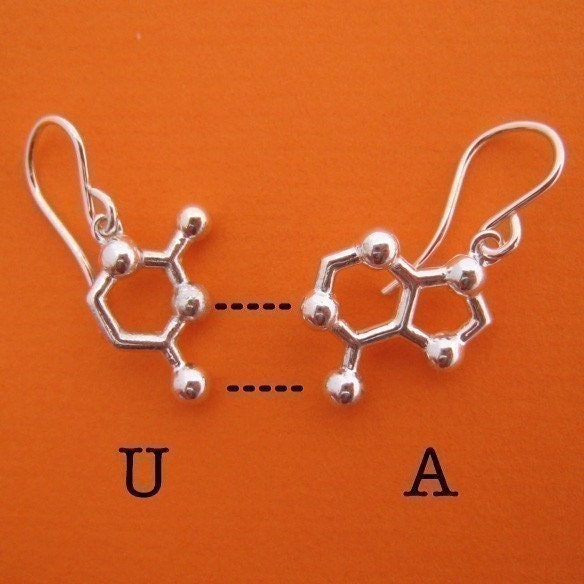
I bought a pair of these and turned them into friendship necklaces for Shea and I (only we got G and C because the bond more strongly than U and A).


Something that I love and use every morning:


I love pottery. I really wish I had time to learn to make my own. I especially like chocolate and navy glazes.

I may post more awesome things in the future, but I'm out of ideas for today.

2.09.2010

Music and the Mind

My number one ambition in life is to study the brain and music cognition. I want to discover the physiological mechanism for emotional response to music. I want to know why we enjoy it so much, why some make it the focus of their lives, and why the world would be completely different in it's absence.
Therefore, I am at the University of Rochester working on my B.S. in neuroscience. This semester I found the perfect class to fit my interests: Music and the Mind. I have a lot of thoughts about the material we've covered and about material I think so far has been missing that I want to discuss. Conveniently, I have a midterm for this class on Thursday, so I'm using this as an opportunity to comment on the class material so far.

The first big topic we discussed was absolute pitch. Popularly called "Perfect Pitch," AP is the ability to label pitches by name with no external reference. If I could do this, my a cappella group would never need a pitch pipe again, because I could just sing them our starting note. I could tell you what note my refrigerator was humming (although not terribly useful that would be cool!). I could also tell if I was singing off key, which would be a lovely skill to have. Although it seems that a skill like this would make me into a better musician, there isn't a whole lot of evidence that AP possessors are innately better musicians. So why do 1 in 10,000 people have it? What purpose does it serve? How do they get it?
There seems to be strong evidence for some sort of critical period involved in the acquisition of AP. This evidence is based off of surveys which show that AP possessors started formal music training before the age of 6. Other studies claim that AP is innate and everyone is born with it, but go through an "unlearning" process. Head turning studies on babies have given some evidence that this theory may have some merit, although the details are vague.
This is only one side of the two-component theory for AP though. Pitch labeling seems to be a skill that few individuals possess. The other component is pitch memory. This seems to be wide spread throughout the population. A study done by Daniel Levitin showed that random people off the street could sing back their favorite song within semitones of the actual key it was written in. Other studies showed that subjects performed above chance in a task in which they had to identify which of two recordings of a popular TV theme song had been transposed and which was in the original key. So why do people possess this skill?
Theories exist that say music evolved accidentally, and that originally its precursors conferred some sort of sexual advantage or survival benefit. Some say that music was no accident, and that it provides survival benefits in itself, such as group bonding, sexual attraction to those proficient at it, and as a form of communication. Based on the evidence I've seen so far, I align myself with the thinking of the latter.The implications of the former theory are that all the components of music evolved separately and then in some massive genetic accident that affected nearly every human on earth each converged to form the phenomenon of music. An experiment done in 2005 by McDermott and Hauser gave evidence that non human primates do not perceive dissonance to be undesirable the way humans do. Proponents for the theory that music evolved as a whole find this experiment to be further evidence. If our evolutionary ancestors don't have this key part of music perception, where did that piece of the whole come from? I believe that the reason humans are the only species who have music as a part of everyday life is because it did evolve as a whole.
The rest of the class to this point has been about psychoacoustics and what physical actions create the vibrations that we perceive as pitch. While fascinating, I don't have much to comment on. There are some very interesting auditory illusions we've discussed, such as Shepard tones:

If you listen carefully, you can catch the trick.
While interesting, we have yet to discuss what I'm most interested in:
Why does that song elicit the emotion that it does? You feel it in the pit of your stomach. It seems to move you. How? Why? Why should vibrations in the air converted to electrical impulses in the inner ear be able to communicate so clearly a vivid, raw emotion? Your skin temperature changes. Your pulse quickens. You feel yourself moving to the beat. You are experiencing what the person who wrote it wanted you to feel. Composers don't have a knowledge of how the brain functions, but they can put together notes and rhythm and volume and have an orchestra play it just the right way so that they express to you a specific emotion. I want to study why music should make people feel anything at all, why the emotions felt seem to be so universal, and how someone can translate their feelings into a musical composition to begin with. I doubt that a composer chooses a minor third to convey sadness because of his vast knowledge of the change in cortisol levels that results upon hearing this interval. Is it something learned, or is it innate? Could we be conditioned to perceive a perfect fifth as sad and a minor third as happy if that was how the culture utilized those intervals? Or could an individual never exposed to music before perceive the emotion Clint Mansell was trying to communicate through Lux Aeterna?
There is some thought that mirror neurons are responsible for the reflection of emotion in the listener, just as they are though to be involved in a baby learning to smile by watching someone else do it. Functional MRI studies have shown that just thinking about a song produces the same neural response as hearing it. I plan to read more into the subject and find out if the same brain activity is occurring in the composer as he conceptualizes a piece of music, and in the listener as he hears the finished product. If this is true, how and why?
These are the kind of questions I want to make a career out of answering. I'll let you know what I find out.

1.24.2010

Dinner Party and Drawing

I made progress towards three of my new years resolutions
this weekend, and it really paid off.


Last night, I had a birthday dinner party for some of my friends with whom I'd like to become closer. I would consider it a great success. A few people didn't show who said they would, but I was very happy with the turnout. I cooked all day to put together the following menu:


Appetizers:

Chocolate-dipped Bananas

Chocolate-dipped Strawberries

Pineapple and Cream Cheese Dip

Fresh Strawberries

Entrees:

Slow-Roasted Marinated Beef Ribs

Parmesan-Crusted Baked Chicken

Sides:

Mozzarella-Baked Broccoli with Lemon Zest

Spinach Sautée

Dessert:

Caramelized Sautéed Bananas

Being able to cook this much food (which all turned out delicious) was very refreshing. I also really enjoyed the company of the guests. I am typically not a very social person. I get overwhelmed easily and would usually rather be by myself. This was a VERY small get together, as I live in a VERY small dorm/apartment, but the size was perfect for me. There were from 4-5 guests at any given time. They all enjoyed the food and we had some very nice conversations. I am very happy I decided to put this together, despite my initial fears, and the time it took up. I still need work on reaching out and not putting up walls, but I am really pleased with this start.

The other bit of progress I made was in the drawing department. I have been wanting to keep up a sketch book, but never got around to doing regular sketches last year. The other night I got inspired, picked up a pencil and drew. It isn't anything fancy, and my technique needs a lot of work, but thats the whole point. Drawn with mechanical pencil (I couldn't find my drawing pencils) by the light of my LCD alarm clock:


I didn't fully finish it before I fell asleep, but I'm pleased with how such a quick drawing turned out. I am really terrible at drawing faces/heads unless they are the focus of the piece, but I plan to improve that through drawings like these. This is by no means on of my better sketches, and I hope to be able to create more of the caliber of my best piece so far:


1.06.2010

Success!

A year ago, I skied for the first time in Colorado after years of skiing the small little hills in Western NY. I was terrified. The green circles were about the same difficulty as the black diamonds of my native ski hill.

I would classify myself as an intermediate skier, and I knew my skill level well enough to know that I could handle the terrain, but it made no difference. I couldn't get over the fear of standing at the top of a hill and looking down. I was so afraid I would crash or lose control that those paranoias filled my mind and made it very hard to enjoy myself.

This year I was afraid the same thing would happen. I like skiing! Why couldn't I just relax and have a good time?

After getting over some pretty bad altitude sickness I went out on the slopes.

I guess a year of working on this fear issue paid off. I started out easy, and as soon as I felt at all nervous I made sure I recognized how in control I felt, how easy the slope actually was, and how much fun it was. To my surprise, the fear dissolved. I was able to ski the beginner hills with out much effort at all, until altitude sickness kicked in again.

Today I went out for the second time, and it was awesome! I was out for about five hours, and never found myself too scared to ski a hill. Occasionally I would feel a little jolt of fear as I reached a steep incline, but I would remind myself that I had successfully skied equally difficult hills before without a problem. The fear dissolved and I continued down the hill, able to enjoy the incredible view, the excellent conditions, and how fun skiing is when you aren't afraid.

I skied mostly blue squares, and would have even tried a black diamond except they were all covered in moguls, which I really have no interest in skiing through.

I'm so glad that the stress is gone and I can enjoy myself fully. Also, I have a valuable tool to put to use when I next attempt to drive stick.

1.01.2010

Resolutions

I've really been meaning to update this blog a little more often than I have, so I think a great way to start off the new year is with a post. Hopefully more will follow.

This New Year's Eve was spend with Shea in Niagara Falls. We sat down and wrote out our resolutions in the hotel room a couple hours before midnight. Mine are as follows:

1. Consistently do the reading for class. I seriously neglected this last semester. I ended up very behind in my classes because I wouldn't do the reading until after the lecture (if at all), so class didn't make as much sense as it could have. I also ended up cramming a lot of reading in during finals week, and my grades suffered as a result.

2. Cook more, make full meals, and eat healthier. Something that really improved my quality of life last semester was the ability to cook my own food in my own kitchen, and not eat so much unhealthy campus food. I want to try new recipes and try to cook regular dinners, and hopefully lose the little weight I've gained from unhealthy eating habits.

3. Don't put off studying so long. I procrastinated a lot. I need to give myself more studying time in the future.

4. Write in Journal Regularly. I wrote several journal entries when I was struggling with emotional conflicts, and it really helped me sort them out. I want to make this a regular habit in the future. I'm also going to add more regular blog posts to this one, for the same reasons.

5. Get organized. I need to have a reliable system for storing papers and books so that when I need to study, I don't have to tear apart the apartment to find the materials.

6. Manage money better. I want to save more and spend less. I have a job, and this semester is paid for, so there really is no excuse for my money not to build.

7. Try to keep clean clothes more abundant. Doing laundry is a pain, but an even bigger pain is doing a lot of laundry at once.

8. Try to draw/paint/create art for fun and improvement regularly. Art is something I truly enjoy, and haven't made enough time for. I need that to change.

9. Practice Singing Regularly. I take voice lessons through the Eastman School of Music, and for me, getting an A is easy even without practice. However, it's an awesome opportunity, and I could learn SO much more if I practiced regularly.

10. Be better about cleaning up messes. I tend to pile my books/coats/bookbag on one chair when I get home, and leave coffee mugs on my desk, making a much bigger mess to clean up all at once.

11. Read non-required readings. I have a lot of books that I'm either half-way through or haven't even started that I want to read.

12. Reach out to more potential friends. There are many people at the U of R, and although many I've found are not people I'd choose to associate with, I shouldn't give up on the rest of them.

13. Get better about talking on the phone. I absolutely HATE calling doctors/customer service people/friends. I'd prefer to email or text.

14. Focus more on what I know, and less on the grades I receive. I am getting much better at this, but there is still much room for improvement. I am in college to gain knowledge about subjects that interest me and will help me pursue a career. A poor GPA might hinder my grad school search, but not caring about the material I've learned will harm my whole career.

15. Make a better effort to learn to drive stick. Shea and I have a Jeep Wrangler. I cannot drive it and I am completely terrified every time I attempt, but I know I will get comfortable with it if I stop avoiding practicing.

Well, that's it for this year's list. I hope you are having a great start to 2010!

9.08.2009

Fear

I wrote this several weeks ago on the back of a napkin in Starbucks:

As school draws closer I'm starting to feel a gnawing feeling grow in my chest. I remember going to college last year thinking I would be a straight-A student just like in high school. That was not the case. I especially struggled the beginning of second semester, and at time gave up hope that I had the ability to be successful. Although I was able to turn my academics around for the most part, the fear of repeating that nightmare is still with me.

What I have to do now is figure out if this emotion is justified. I recognize that a number of factors contributed to my poor performance last year, and intelligence was not one of them. My living situation, family problems, difficulty motivating myself, procrastination, attention span, fear of asking questions, and a large jump in the difficulty of class material were the biggest factors.

All of these things are completely within my control to either change, or find a solution. I have been working on and improving missing skills the whole summer. Additionally, fear of failure is not useful. The knowledge of what can lead to failure is. I have learned so much about the kind of skills I need to have and improve to do well, and I know that I can't let fear stand in my way. I've noticed that controlling my fear is really just another issue I need to work on, not a reason to dread the upcoming school year.

If I were to let the fear of falling down once keep me from getting back up, that would be the worst kind of failure there is.